
Packtrail bikepacking guide
Bikepacking packing list: the complete checklist by system
A reliable bikepacking packing list should cover every essential system without becoming a random inventory. Organising gear by purpose first, then assigning it to bags, makes missing items easier to spot and the final pre-ride check much faster.
Start with trip conditions, not equipment
Distance alone does not decide what you need. Weather, water access, remoteness, terrain, resupply options, accommodation, and the time between stops have a bigger effect on the loadout.
Write down the expected low temperature, rain probability, longest food carry, longest water carry, and likely mechanical risks before choosing individual items. This keeps the list tied to the ride rather than to generic recommendations.
Shelter and sleep system
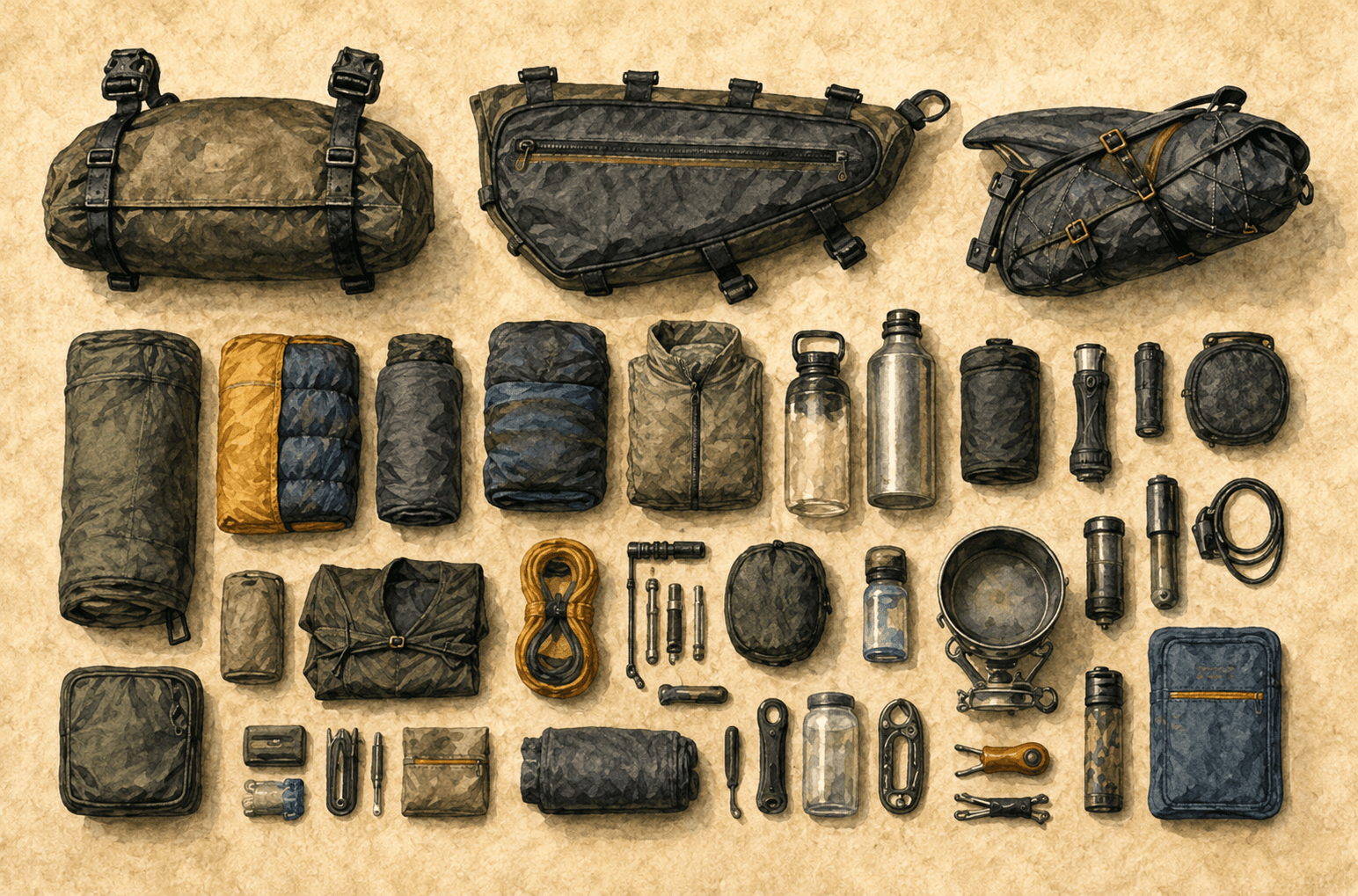
For camping trips, consider shelter, ground protection, sleeping bag or quilt, sleeping pad, pillow if needed, and dry storage. Match insulation to the expected overnight low with a realistic safety margin.
Credit-card tours may replace most of this system with a compact sleep layer and overnight essentials. Keep accommodation confirmation and an emergency fallback available offline.
Clothing and weather protection
Pack the smallest clothing system that handles riding, cooling down, and the forecast. A rain shell, warm layer, spare socks, gloves, and a dry sleep layer often matter more than several complete changes of clothes.
Separate clothing worn while riding from clothing reserved for camp. Protect the dry layer even when the rest of the setup gets wet.
Food, water, and cooking
Calculate capacity around the longest stretch without reliable resupply. Include bottles or bladders, purification when required, electrolytes, ride food, meals, and an emergency reserve.
If you cook, add stove, fuel, lighter, pot, utensil, and cleaning needs as one system. Keeping related items together makes the list easier to reuse on later trips.
Repair, first aid, and safety essentials
Build the repair kit around the actual bike: tubes or plugs, pump, tyre lever, multitool, chain link, derailleur hanger, tape, cable ties, and any model-specific tool that could end the ride if missing.
Add a first-aid kit, medication, identification, emergency contacts, lights, reflective elements, and route backup. Critical safety checks deserve their own final pass instead of being buried in a long list.
Navigation, electronics, and personal items
Include phone, GPS device, charging cables, power bank, lights, camera equipment, offline maps, and any international plug or battery required by the route.
Personal essentials can include wallet, keys, sunscreen, hygiene items, glasses, contact lenses, and permits. Small objects are easy to forget because they add little weight but can create large problems.
Turn the master list into a ride-ready checklist
The planning list can be detailed, but the departure check should stay short: water, food, medication, repair kit, lights, weather layer, wallet, phone, navigation, and charged electronics.
Packtrail separates gear planning from packed status. Save the complete loadout by trip, assign each item to its actual bag, and use the final checklist to see what is still missing before rollout.