

Packtrail bikepacking guide
Bikepacking pre-ride checklist: what to check before you roll out
The best bikepacking plans still need a calm final check. A short, ride-specific pre-ride checklist catches loose bags, low batteries, missing layers, and route changes while you can still solve them easily. It should support your judgement, not replace proper bike maintenance or route decisions.
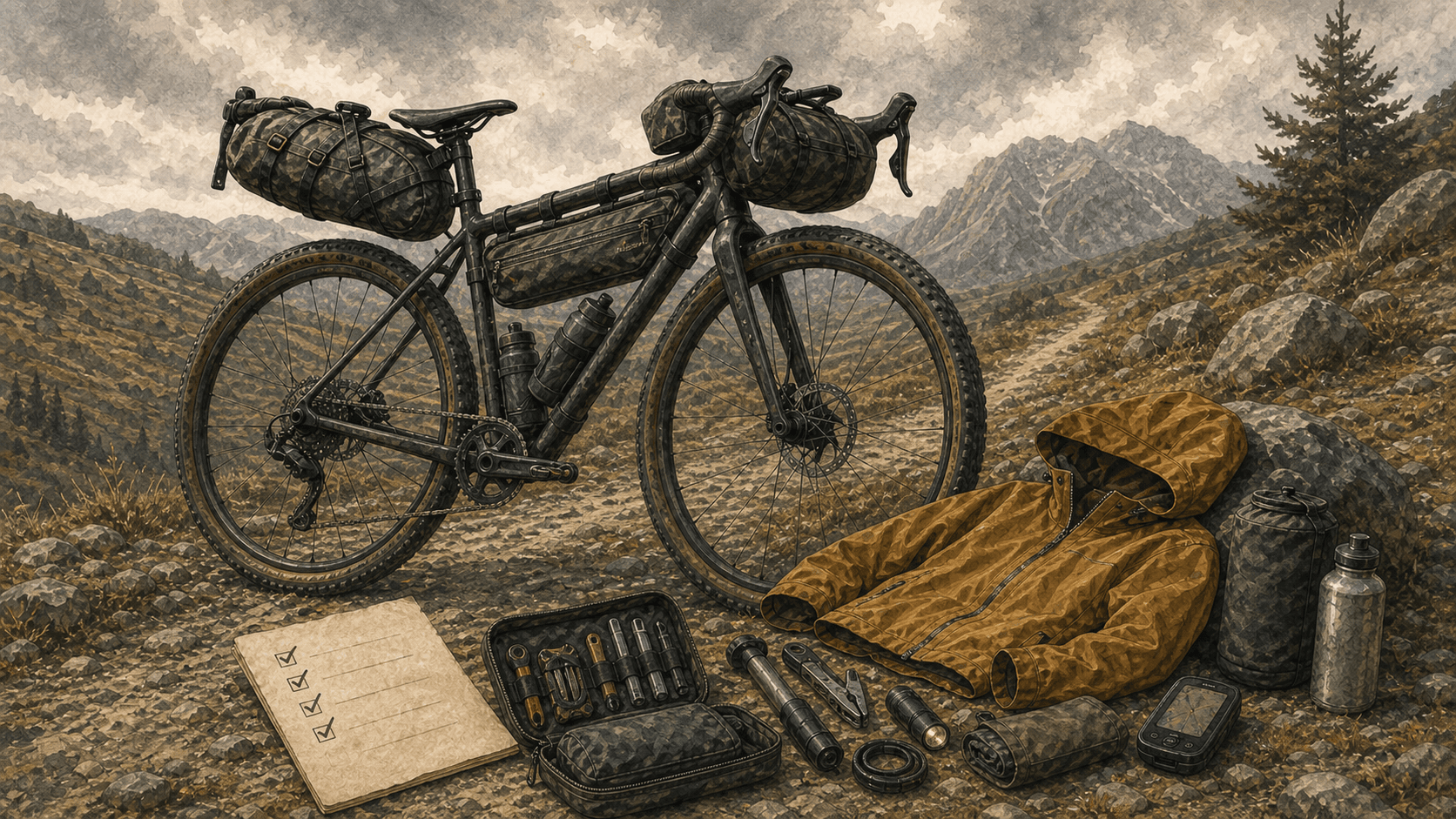
Keep the final check short and specific
A master packing list can be detailed; the final departure check should be fast enough to use every time. Focus on the things that change between rides or can fail silently: weather, water, route, batteries, bags, and critical equipment.
Build a different version for an overnighter, alpine weather, touring with accommodation, or a local test ride. A checklist that matches the trip is far more likely to be completed than one long generic list.
Check the bike before checking the bags
Confirm tyre condition and pressure, brakes, drivetrain, axle or quick-release security, and anything recently adjusted. Spin the wheels, test the brakes, and look for rubbing, leaks, or unusual movement.
If you find a mechanical issue that you cannot assess or repair safely, get qualified help before riding. A packing checklist is not a substitute for regular maintenance or a professional inspection.
Confirm bags, mounts, and clearances
Check every strap, buckle, rack mount, and cage bolt with the bike loaded. Compress soft bags, secure loose webbing, and make sure the load cannot enter the wheel, brake rotor, chain, or drivetrain.
Turn the bars fully and roll the bike a short distance. Check heel clearance, tyre clearance, cables, lights, and any bag that can sway or shift after the first rough section.
Match food, water, and layers to the current plan
Review the forecast, not only the one you saw while packing. Confirm your starting water, treatment method where needed, first resupply, ride food, and an emergency reserve for delays.
Make sure the warm or rain layer is still appropriate for the temperature, wind, and expected stop time. A layer packed in the right bag is only useful if it can be reached before you are already cold or wet.
Verify route, navigation, and communication
Open the route, check for closures or changes, and keep an offline backup when the trip leaves reliable signal. Confirm that your phone, navigation device, lights, and power bank are charged and that the required cables are packed.
Share your broad plan and expected return with a trusted contact when appropriate for the route. Make sure identification, payment method, and essential emergency information are with you rather than left in a bag at home.
Make repair and first-aid gear easy to reach
Carry a repair kit that fits your specific bike and tyre setup: inflation, puncture repair, tyre levers, multitool, chain solution, and any model-specific spare that could end the ride. Check consumables such as plugs, sealant, and batteries instead of assuming they are ready.
Keep first aid, medication, and emergency essentials protected from weather and accessible. Revisit this part of the checklist after any bike or route change.
Use a 60-second rollout check in Packtrail
Before leaving, complete one final pass: bike, bags, water, food, weather layer, route, lights, phone, navigation, repair kit, and keys or wallet. The goal is not perfection; it is to catch a missing essential before the first kilometres.
Packtrail keeps a Ride-ready checklist with the active trip, alongside the packed gear and bag plan. Reuse the essentials that always matter, then add trip-specific checks whenever conditions or equipment change.