
Packtrail bikepacking guide
How to pack bikepacking bags for balance and quick access
Packing bikepacking bags is a problem of position as much as capacity. Heavy gear should support stable handling, bulky gear needs the right shape of storage, and items used during the ride must remain accessible without unpacking the whole bike.
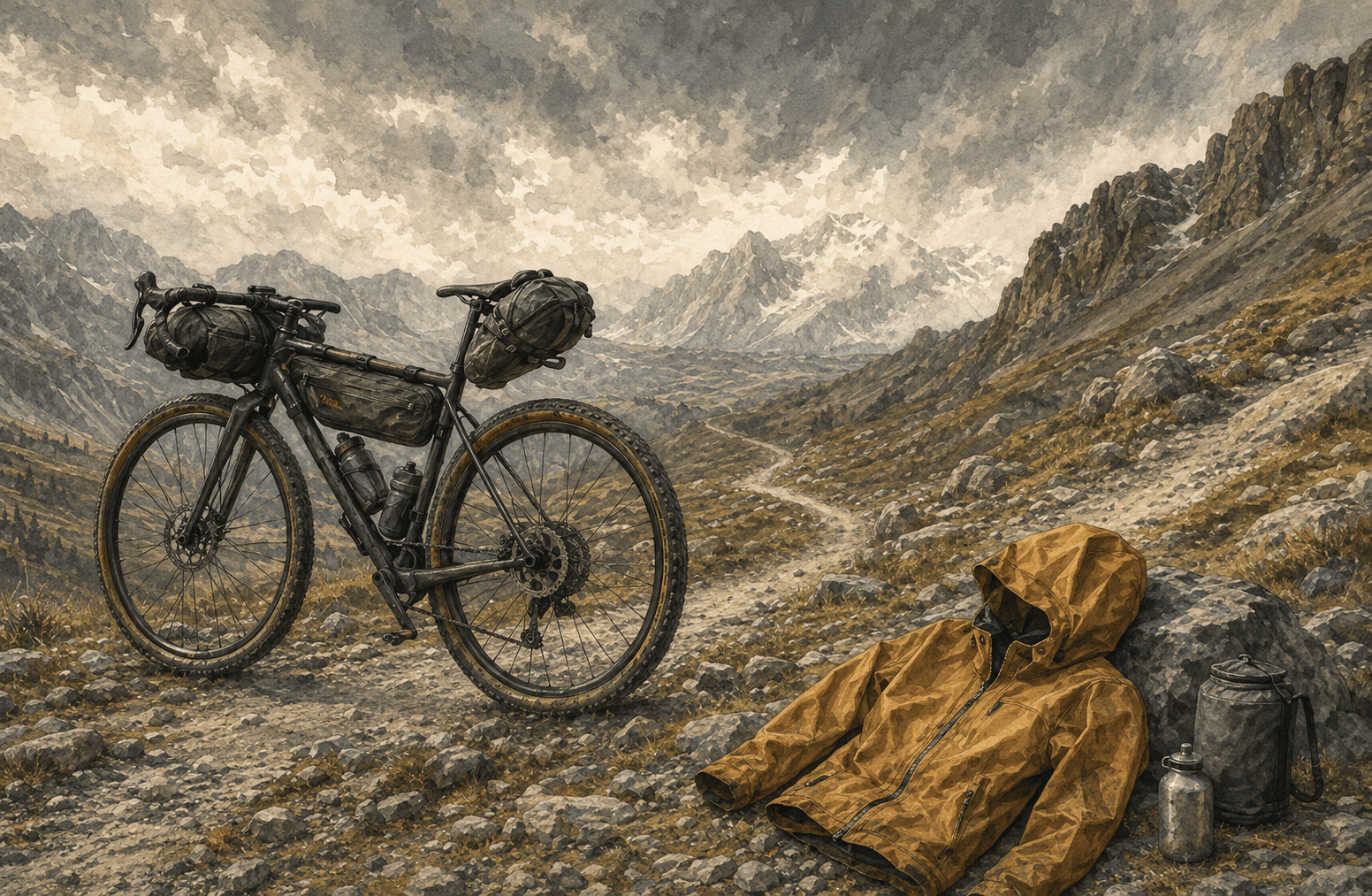
Give every bag a clear job
A repeatable setup starts when each bag has a purpose. Frame storage handles dense items, handlebar and saddle bags carry light bulky gear, and cockpit bags hold things needed while riding.
Avoid filling bags randomly until everything fits. A deliberate system makes camp setup faster and helps you notice when an important item is missing.
Frame bag: compact and heavy gear
The frame triangle sits close to the bike centre, making it useful for tools, spares, batteries, cooking equipment, and food. Keep the densest items low when the bag shape allows it.
Check bottle clearance, cable routing, and how a full bag affects pedalling. Capacity shown in litres matters less if the shape does not accept the items you plan to carry.
Handlebar roll: light and compressible items
Sleeping bags, quilts, insulated clothing, and compact shelter parts often work well at the handlebar because they use space without adding much weight.
Keep the roll narrow enough for steering and brake controls. Excess weight high and forward can make technical riding and slow steering less predictable.
Saddle bag: camp gear with stable compression
Saddle bags suit clothing, sleep gear, and other items that are not needed at every stop. Pack tightly from the seatpost outward and remove empty space that encourages movement.
A swaying saddle pack often means the load is too heavy, poorly compressed, or mounted too far behind the saddle. Move dense items toward the frame before adding more straps.
Top-tube and feed bags: items needed while riding
Use cockpit storage for snacks, phone, sunscreen, camera, small battery, sunglasses, and other items reached during short stops or while riding safely.
Do not overload these small bags. The goal is access, not maximum capacity, and crowded cockpit storage can interfere with knees, steering, or cable movement.
Fork, rack, and pannier storage
Fork bags can carry symmetrical light loads such as water, sleep gear, or cooking equipment. Racks and panniers offer more capacity for touring setups but still benefit from balanced left-right weight.
Respect mount and bag limits. Volume and weight are different constraints: a large dry bag may be light, while a small tool pouch can be surprisingly dense.
Test the complete setup before the trip
Ride rough ground, climb out of the saddle, brake firmly, and check heel, tyre, cable, and light clearance. Listen for movement and adjust straps after the load settles.
Packtrail lets you model the actual bag positions, names, capacities, and item assignments before this test. Update the saved setup after the ride so the next loadout begins from something proven.